

HealthPlus Network of Specialty Centers in Abu Dhabi

Book An

Appointment
Call us

600 503035
Book An

Appointment
Call us

600 503035

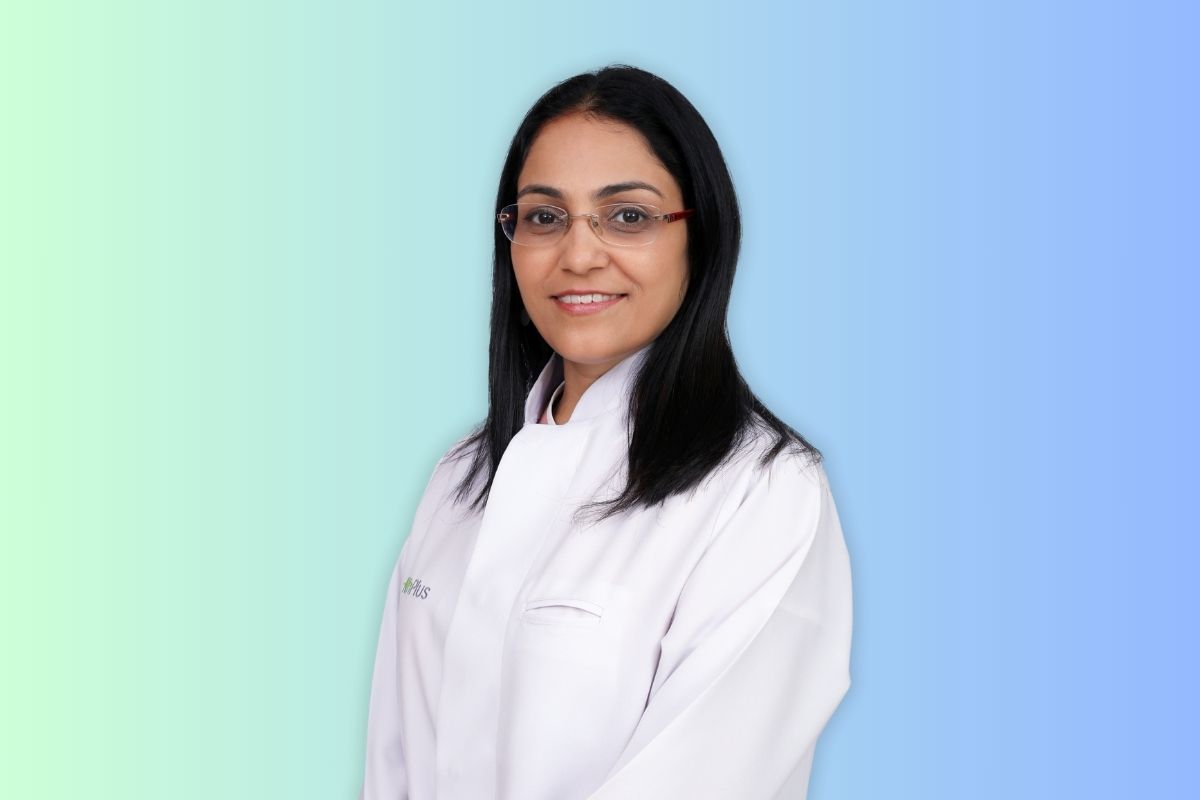
Dr Neha Gami of HealthPlus Family Health Center explains symptoms, early prevention, treatment and all things cervical cancer
In the realm of women’s health, a topic that continues to demand attention is cervical cancer. With medical advancements in recent years, HealthPlus Family Health Center has continued to battle this formidable adversary with large success.

However, there is still a long way to go in terms of raising awareness on risk factors, prevention strategies, and the crucial role of regular screenings when it comes to early detection.

Cervical cancer primarily stems from the human papillomavirus (HPV), a virus that can silently infect your body for several years before potentially evolving into cancer over time. While HPV infection is widespread, only a fraction of cases progress to cervical cancer.

There are different types of cervical cancer, says Dr Neha Gami, Specialist in Obstetrics & Gynecology at HealthPlus Family Health Center.

“The cervix has glands as well as squamous tissue. Cancer can start from glands or from the squamous cells, but the more common one is the squamous cell carcirnoma, which is primarily caused by an HPV infection.”

Some of the signs to be on the lookout for involve blood mixed in vaginal discharge, she adds.

“Symptoms can also include bleeding after contact with your partner. In advanced stages of cervical cancer, it can affect your bladder, kidney, etc. But that’s a very, very late stage. The earliest symptoms of precancerous changes can go on for about 10-15 years before you actually develop cancer.

That could include bloody discharge and discomfort too, or sometimes there are no symptoms at all. And that’s why it’s important to go for screening for cervical cancer, because most women will be asymptomatic before they actually develop precancerous or cancerous changes.”

In Abu Dhabi, the Department of Health recommends all women between 25 to 65 years of age to do a Pap smear every three to five years. The same protocol is followed in most countries across the world, with some recommending screenings at 21 years, or at least every three years since you have a partner.

While cervical cancer is not known to have any genetic factor, there are several risk factors including persistent HPV infection and of course, lifestyle factors such as smoking, a compromised immune system from other autoimmune conditions, long-term use of birth control, early marriage and childbirth, multiple partners and such.

As leaders, HealthPlus Family Health Center brings the best of science and technology to champion early detection, with Dr Neha elaborating, “In terms of screening, we offer Pap smears as well as an HPV virus testing. The HPV virus tests provides very useful added information to decide which women are at high risk or otherwise.

We also have the latest and commonly used HPV vaccine, which protects against nine types of HPV viruses. The best age to administer it is before 15 years but can be done even up to 26 years of age.”

A lesser-known fact might be the availability and recommendation of the HPV vaccine for young boys. While the school health programmes have not incorporated them in yet, Dr Neha suggests, “It is available and even boys can take the vaccine, which will help prevent them from contracting or transmitting the virus.”

On the treatment front, if somebody tests positive for a Pap smear or HPV test, or presents alarming signs, a colposcopy is conducted, she says on the process of diagnosing and treatment.

“A colposcopy is a procedure in which we actually look at the cervix. We identify the areas of change and then based on our training and experience tell you whether these are early, advanced or cancerous changes. Based on that, a biopsy is taken, which is the final way to diagnose if a person has pre cancer or cancer.”

Fortunately, data from the UAE in recent years shows the awareness campaigns run by the government, including the vaccine program since 2008, have left a positive impact.

“The numbers [mortality rate] are going down. And one of the main factors is regular screenings and early detection. And obviously we have more advanced radiotherapy techniques plus treatment modalities as well. Surgery has also progressed from open surgeries; we can now even do the surgeries laparoscopically. That improves the survival and the longevity of the patient,” she says.

With most insurances in the UAE inclusive of Pap smears, as Dr Neha succinctly puts it, “No woman should ever have to die from cervical cancer in today’s times.”

INTERVIEW: Dr Hala shares general wellness tips for diabetics in the UAE

Monikered ‘the silent threat’, diabetes affects millions worldwide with little warning until complications arise. Dr Hala El Ahmadieh, Diabetes & Endocrinology Consultant at HealthPlus Diabetes and Endocrinology Center, emphasises the urgency of recognising the warning signs early.

In just two decades, the number of people living with diabetes has skyrocketed, and experts predict that by 2045, over 700 million people will be diagnosed.

“The increase in diabetes is largely driven by lifestyle factors, particularly rising obesity rates,” she explains. Diabetes comes in different forms, the most common being Type 1 and Type 2. Type 1 diabetes predominantly affects younger individuals under the age of 20, where the pancreas fails to produce insulin. Type 2 diabetes accounts for 90 to 95 per cent of cases, whereby the body becomes resistant to insulin, failing to use it effectively.

Detecting diabetes early is crucial, as unmanaged blood sugar can lead to severe complications.

“One-third of people with diabetes are undiagnosed,” Dr Hala says. “The issue is that diabetes can silently cause damage before it’s discovered, leading to complications like heart disease, stroke, kidney failure, or even blindness.”

Screening is recommended, particularly for individuals over 30 in the UAE, or earlier if other risk factors, such as family history, obesity, PCOS or a history of gestational diabetes are present.

“We work with a team that includes dietitians, podiatrists, and cardiologists to monitor for any complications. Regular foot exams, cardiovascular assessments, and nutritional guidance are all part of a well-rounded care strategy,” Dr Hala explains.

“Patients should be screened for eye complications annually, as diabetes can affect the small blood vessels in the retina, potentially causing blindness,” she advises.

A urine test to check for proteins should also be done at least once a year to monitor kidney function.

The technological advancements in diabetes management have been game-changing, to say the least.

“Continuous glucose monitoring (CGM) has revolutionised how we monitor blood sugar levels,” Dr Hala shares.

These sensors when placed on the skin, provide real-time glucose readings, allowing doctors to analyse trends and adjust treatment plans.

“CGM helps us track sugar levels throughout the day, highlighting how diet and activity affect glucose. Additionally, insulin pumps, particularly closed-loop systems, are now available, mimicking the pancreas by delivering insulin as needed. These pumps simplify life for people with type 1 diabetes or those on insulin therapy, making diabetes management more seamless,” she says.

These innovations have made living with diabetes more manageable and offer hope for better control and fewer complications. Even as the world embraces these new technologies, the focus at HealthPlus remains on empowering patients to take control of their health and live fuller, healthier lives.

For diabetics or even pre-diabetics, Dr Hala has some general wellness tips to keep you healthy – and maybe even potentially reverse your condition!

  • Losing five to 10 per cent of body weight will help reduce insulin resistance.
  • Avoid foods that are high in calories, sugar and sweetened beverages. Maintain a food diary
  • Increase daily activity, be active at least 30 minutes a day, five days a week with resistance training exercises at least twice
  • Try to eat at regular times.
  • Don’t go longer than five hours without eating
  • Having a well-balanced diet is very important. Half of the plate should be vegetables, one-fourth carbohydrates and one-fourth protein
  • Always read labels, because sugar is present in different food items in the supermarket in the form of honey, high fructose corn syrup, maple syrup, etc.
  • Limit alcohol intake, avoid smoking, increase fibre intake

Abu Dhabi nurses share why their work goes far beyond hospital walls

Every year on May 12, the world celebrates International Nurses Day to honour their contributions and highlight their irreplaceable role in the world of healthcare. The date marks the birth anniversary of Florence Nightingale, the founder of modern nursing, whose legacy continues to inspire caregivers worldwide.

Since its introduction in 1965 by the International Council of Nurses (ICN), the day has become a global call to value the nursing profession, which serves as a pillar of healthcare and a foundation for healthier, more resilient societies.

On the occasion of International Nurses Day, nurses in Abu Dhabi shared with Aletihad what their profession means to them.

For Sara Alkuwaiti, a nurse at Imperial College London Diabetes Centre, nursing is about rebuilding trust, being a source of comfort and guidance, and reassuring every patient that they are in safe hands.

“Being a nurse is not just a profession — it is a lifelong commitment to care, compassion, and community. I’m proud to serve my country by supporting patients on their journey to better health every day,” she told Aletihad.

Alya Alhammadi, a nurse at HealthPlus, echoed the sentiment. To Alhammadi, every patient interaction is both a responsibility and a privilege, rooted in dignity, personal care, and compassion.

“Nursing allows me to make a difference in people’s lives, one patient at a time. As an Emirati nurse, I feel honoured to represent the strength and empathy of our nation’s caregivers,” she told Aletihad.

Mark McCarthy, an Irish nursing manager at the Multidisciplinary Simulation and Life Support Centre, Cleveland Clinic Abu Dhabi, said: “The UAE has given me the chance to grow as a nurse and as an educator. After 20 years in this profession, I have seen how much healthcare continues to evolve, and being in a place that invests in training and innovation makes a real difference. Through simulation, we prepare caregivers for the realities of clinical care by giving them a safe space to practise, learn and improve.

McCarthy noted that education is essential for patient care and nursing in the UAE was based on trust, competence, as well as teamwork.

Also, Queen Folawiyo, an Irish senior shift leader at the Neurology/Pain Management Clinic and Chair of the Ambulatory Coordinating Council at Cleveland Clinic Abu Dhabi, said being a nurse in the UAE is both a privilege and a responsibility. 

“This country has created an environment where nurses are empowered to lead change, drive quality, and shape the future of healthcare. My journey has shown me that nursing goes far beyond clinical tasks, it’s about listening, advocating, solving problems, and lifting others up every day," Folawiyo said.

"In the UAE, the opportunities to grow, to lead, and to make a difference are real. And I am proud to be part of that journey.”

Nurses Strengthen Economies

This year’s theme, “Our Nurses. Our Future. Caring for nurses strengthens economies”, serves as a reminder that supporting nurses is not only essential for patient care but also for the strength and stability of national economies. In its latest report, the ICN said that “investing in employee health could unlock $11.7 trillion in global economic returns”. 

The report also cited research showing that a 1% increase in nurse density correlates with a 0.02% increase in life expectancy. And with each additional year of life expectancy, countries exhibited a corresponding 2.4% increase in economic growth.

However, both the ICN and the WHO warn in their reports of a worsening global nursing shortage. The WHO came out with its latest “State of World’s Nursing” report on Monday, with the UAE chairing its launch in the Eastern Mediterranean region. According to the report, the world was already short by approximately 5.8 million nurses in 2023, and by 2030, 89% of the shortage will be borne by low- and lower-middle-income countries.

The ICN report added that an additional 30 million nurses will be required to meet future healthcare demands.

“We cannot and would not want to envision a world without nurses. We must take action to diminish the threats to safe, supportive, and healthy working conditions that will attract future nurses and retain the dedicated nurses who are key to healthier communities, responsive societies, thriving economies, and powerful nations,” Dr. Pamela Cipriano, ICN President, said in the report.

In response, the ICN has put forward its “Caring for Nurses Agenda”, a seven-point action plan addressing urgent areas such as fair pay, safe staffing levels, workplace safety, career progression, and mental health support.

Meanwhile, the WHO called on countries to scale up the nursing workforce “by expanding education and training capacity, increasing jobs for nurses in the health system, improving working conditions and strengthening leadership and governance”.